Raffles & Giveaways
Raffle Wheel Rules for Fair Online Contests
A raffle wheel makes the draw transparent, but it can't make an unclear entry process fair. Most disputes trace back to rules that were never written down.
Key takeaways
- Written rules, published before entries open, prevent almost every fairness dispute that comes up after a raffle wheel draw.
- Legally, a promotion combining a prize, an element of chance, and consideration (typically a purchase or fee to enter) is treated as a lottery in most jurisdictions, and private lotteries are illegal almost everywhere. Removing one of those three elements is what makes a raffle or sweepstakes legal.
- The core rule elements are the same regardless of prize size: eligibility, entry method, draw date/time, and how the winner is verified.
- This is general practical guidance, not legal advice. Contest and raffle regulations vary by region, platform, and prize value.
Why rules matter more than the tool you spin with
A raffle wheel removes doubt about how the winner was selected from an entry pool.
It does nothing to resolve disputes about who was supposed to be in that pool, what counted as a valid entry, or when entries closed.
Those questions only have clean answers if you wrote them down before anyone entered.
The lottery / sweepstakes / contest distinction
This is the one piece of raffle terminology worth understanding even if you skip everything else legal.
A promotion becomes a lottery, regulated or outright illegal in most places when run privately, when it combines all three of these elements:
- Prize: something of value is awarded.
- Chance: the winner is selected randomly (which is exactly what a raffle wheel does).
- Consideration: entrants have to pay, purchase something, or give something of value to enter.
How legitimate promotions remove one element
- A sweepstakes keeps the prize and the chance element but removes consideration: entry must be genuinely free (the "no purchase necessary" principle). This is the structure most social media giveaways use.
- A contest keeps the prize but removes pure chance, requiring some skill or judgment in selecting the winner (a caption contest judged by a panel, for example). This doesn't apply to a wheel-based draw, since a wheel is chance by definition.
- A raffle typically keeps consideration (tickets are usually sold) but is legal specifically because many jurisdictions carve out exceptions for raffles run by qualifying nonprofits or under specific licensing/registration. That's exactly why raffle rules vary so much by state and country, and why paid-entry raffles deserve more legal scrutiny than free giveaways.
The core rule elements to define before you open entries
- Eligibility: who can enter (age, location, one entry per person vs. per household, employees excluded if relevant).
- Entry method: exactly how someone enters (comment, form, in-store, ticket purchase), and whether multiple methods count as multiple entries or just one.
- Entry window: a clear start and end date/time, stated in a specific timezone.
- No-purchase-necessary statement: if entry is meant to be free, say so explicitly ("No purchase necessary to enter or win. A purchase will not increase your chances of winning."). This single line is often what separates a legal sweepstakes from an unintentional lottery.
- Draw method and date: that you're using a raffle wheel, when the draw happens, and whether it's public or recorded.
- Winner verification: how you'll confirm the winner's identity/eligibility before awarding the prize, and what happens if they don't respond.
- Prize details: exact value/description and whether substitutions are possible.
- Platform disclaimer, if applicable: e.g., "This promotion is in no way sponsored, endorsed, or administered by, or associated with, Instagram," which platform promotion guidelines commonly require.
A copyable rules checklist
- Who can enter (eligibility)
- How to enter (method + platforms)
- One entry per person, or how multiple entries are counted
- No-purchase-necessary statement (if entry is meant to be free)
- Entry opens: [date/time, timezone]
- Entry closes: [date/time, timezone]
- Draw method: raffle wheel, [live/recorded], on [date]
- Prize: [exact description/value]
- Winner notified via: [method], must respond within [timeframe]
- What happens if winner doesn't respond
- Where results will be announced
- Platform disclaimer (if running on Instagram/Facebook/YouTube/TikTok)
Running the draw against your published rules
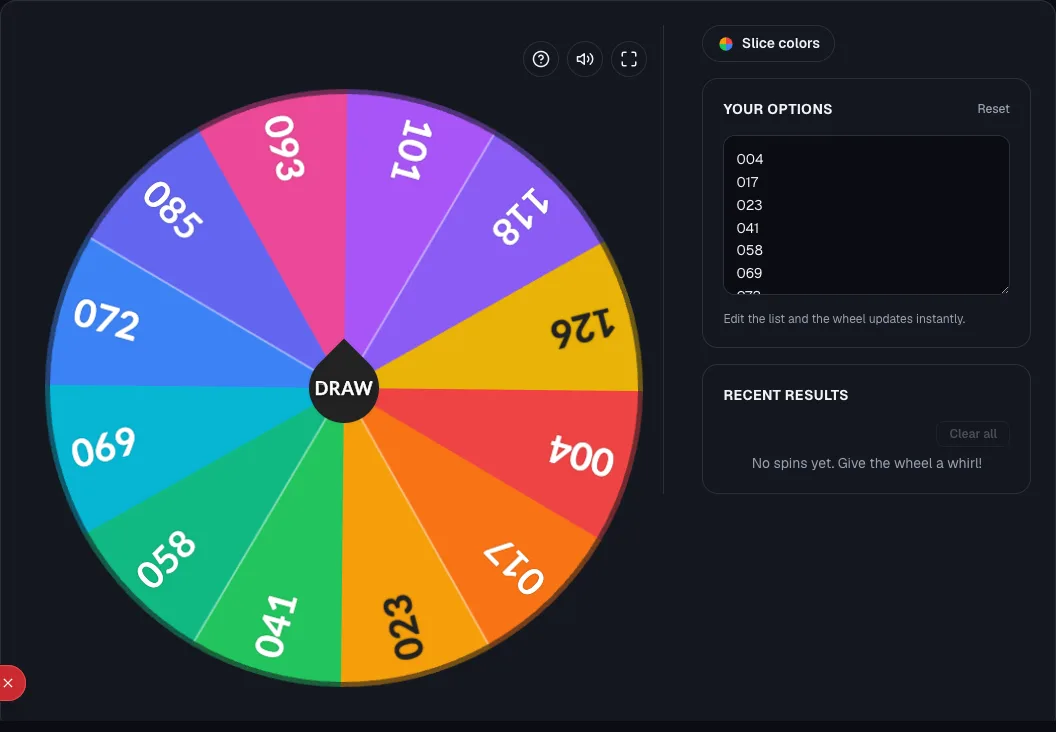
Once entries close, follow the exact process you published: same entry list, same draw method, same announcement channel.
Deviating from your own stated rules, even with good intentions, is what erodes trust, not the randomness of the raffle wheel itself.
See our step-by-step fair raffle guide for running the actual draw.
Our guide on picking a giveaway winner fairly covers the announcement and disclosure steps specific to public social media giveaways.
Legal note
Raffles, sweepstakes, and contests are regulated differently depending on your location and whether the promotion involves consideration.
This checklist covers operational fairness, not legal compliance.
The lottery/sweepstakes/contest distinction above is a simplified explanation, not a substitute for reviewing your specific jurisdiction's rules.
For anything beyond a casual, free-entry draw among friends or a classroom, check your local or regional regulations, or consult legal counsel before collecting entries.
That matters especially if any purchase or fee is involved.
Ready to try it yourself?
Open the toolFrequently asked questions
- Do I need rules for a small, informal raffle among friends or a classroom?
A full legal-style rules document isn't necessary, but stating the basics (who can enter, when the draw happens, how the winner is announced) still prevents confusion.
And it's free to write down.
- Can I change the rules after entries have started?
Avoid it if possible. If you must (e.g., extending a deadline), announce the change publicly and give existing entrants the same updated information rather than applying it silently.
- What if two people are tied for "most entries" in a ticket-weighted raffle?
This doesn't apply to a wheel draw: each ticket or entry is one slice, so the wheel handles weighting automatically without needing a tiebreaker.
- Is "no purchase necessary" required even if my giveaway is genuinely free to enter?
Including it explicitly is still good practice. It removes any ambiguity for entrants and reviewers, even when there was never a purchase requirement to begin with.
Sources
- Contest, Giveaway, or Sweepstakes Laws By State (KickoffLabs)
- Social Media Rules for Giveaways (KickoffLabs)
- 9 Must-Know Instagram Giveaway Rules for Success in 2026
- Instagram Contest Rules Template